
How the Manhattan Residents Directory Works
Manhattan records are divided between New York City agencies, New York State systems, courts, and research institutions. Begin with the strongest detail already in hand. An address is best normalized through the Department of Finance property tools; a known person can be checked against the exact-field voter service; and an older family question often starts with a directory year or archival index. Each source has a narrow purpose, so a result is more useful when it is checked against a second record that answers a different question.
For a practical Manhattan residents directory search, move from a current identifier to the custodial record rather than relying on a broad name result. A property account can connect a location to a BBL, an ACRIS document can identify parties to a filing, and an archive volume can place a household at an address in a particular period. These are clues, not a single proof of who is currently present.
- Use the property portal to standardize an address or obtain its BBL.
- Check ACRIS for the parcel’s recorded document trail.
- Use the NYC voter service only to confirm a known, exact registration match.
- For an earlier household, consult NYPL or Municipal Archives directory and census material.
- Follow the custodian’s request route when the needed record is not indexed online.
Manhattan Residents Directory Record Keepers
New York County and Manhattan share a city-wide records landscape. The City Register holds the recorded real-property trail through ACRIS, the Department of Finance maintains the Property Information Portal, and the Board of Elections operates a narrow voter-status check. Court files are governed by the courts and clerk, while historical names and addresses live with NYPL and the Municipal Archives. The Manhattan by-street guide follows the address chain in more detail.
NYC City Register / ACRIS
66 John Street, 13th Floor
New York, NY 10038
212-487-6300
NYC Department of Finance
Property Information Portal
Address and BBL research
Agency help through 311
Manhattan Board of Elections
200 Varick Street, 10th Floor
New York, NY 10014
212-886-2100
Manhattan Residents Directory and the BBL
The BBL is the key that makes a Manhattan address search more stable. It combines borough, block, and lot, and Manhattan uses borough code 1. A street address can have several entrances, a different legal form, or a changed number; a BBL identifies the tax lot that can be carried between the Department of Finance, ACRIS, DOB, and planning maps. For a condominium, look carefully at the unit tax lot and the billing BBL because the latter may describe an administrative relationship rather than a resident.
Useful distinction. A situs address is the physical location, a mailing address is where notices go, and a BBL is the legal tax-lot key. They can point to different people or places.
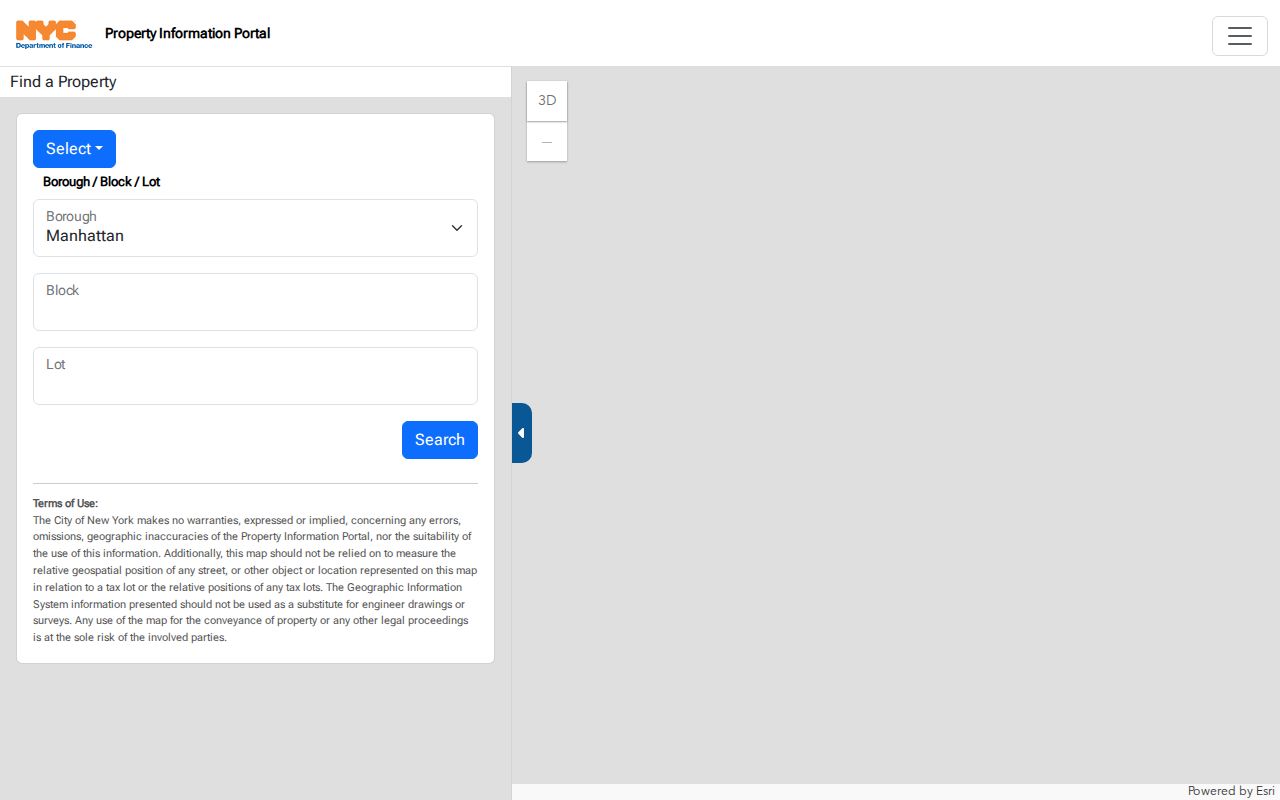
The Department of Finance Property Information Portal begins the process with address, intersection, common-place, BBL, borough/block, condo, co-op, REUC, open-tax-account, air-lot, and subterranean-lot modes.
Manhattan Residents Directory Deed and Parcel Trail
ACRIS is the City Register index for Manhattan real-property documents from 1966 forward. Its documented search modes include party, parcel, document type, document ID or CRFN, transaction, reel/page, and UCC or federal-lien number. A deed detail can supply grantor, grantee, execution and recording dates, BBL, property type, amount where shown, and an image link. Record the legal description too, particularly when a document spans more than one parcel.
The index is not the whole title history. When a record predates the online range, the research path continues through City Register facilities at 66 John Street, where public-terminal print and certification requests are available. A deed party may be an owner, lender, trustee, or other participant, so it should be paired with the property account and later address evidence before drawing a people conclusion.
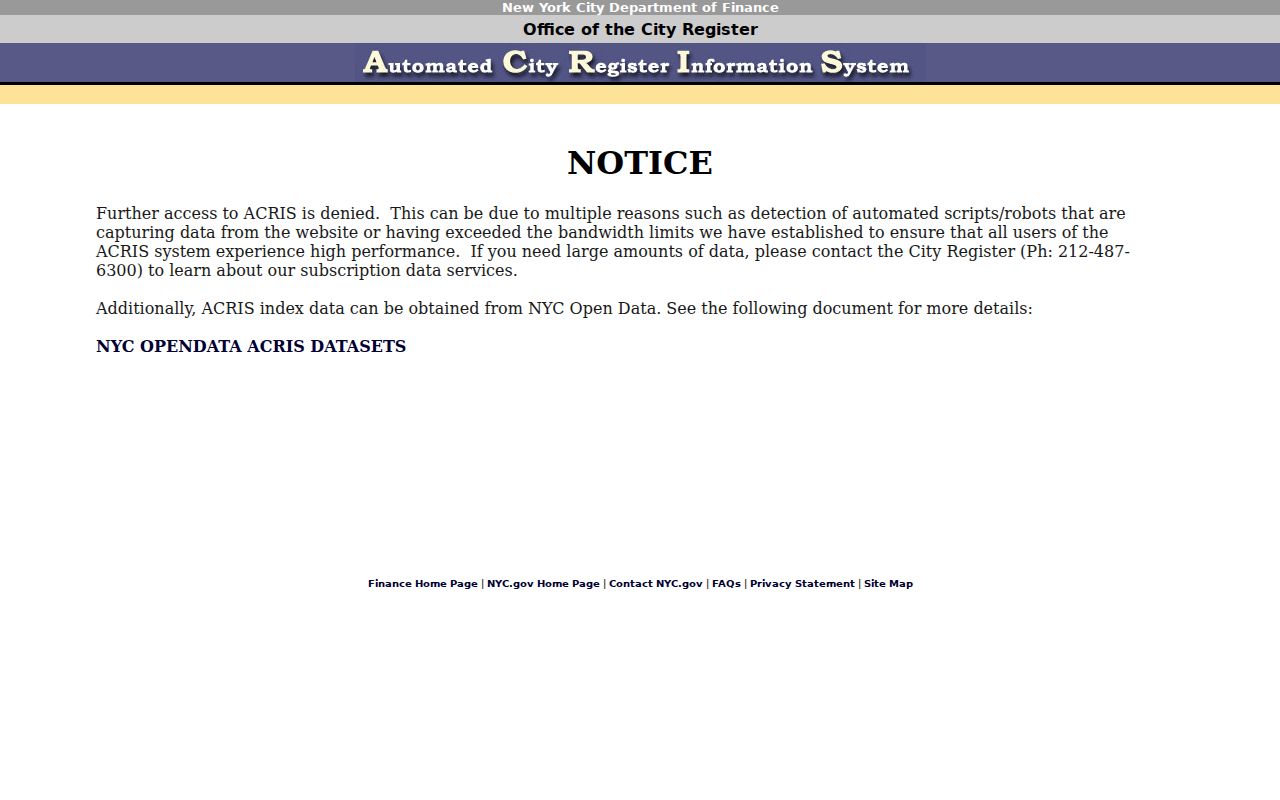
ACRIS opens with property-record and address-parcel options that support this parcel-first approach.
Manhattan Residents Directory Voter Confirmation
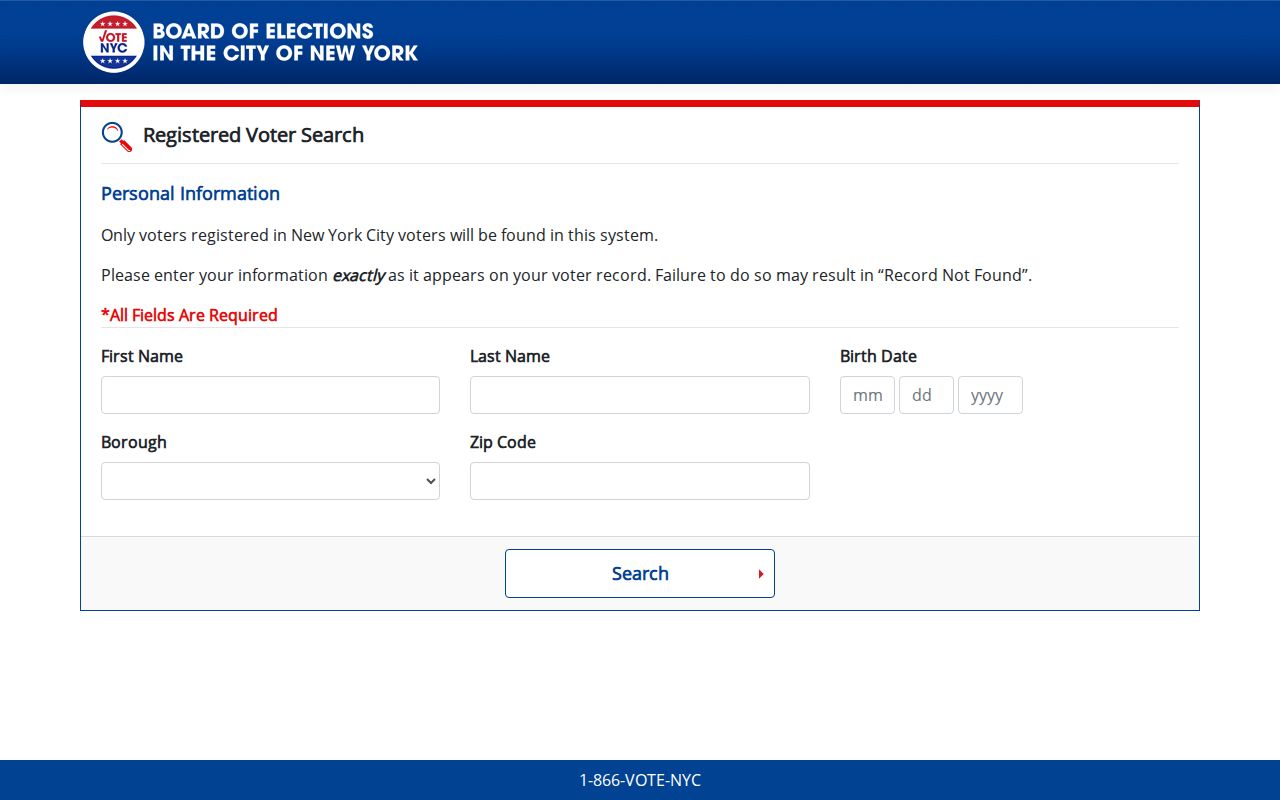
NYC’s Registered Voter Search is designed to confirm a known person rather than provide a browsable roll. It requires first name, last name, birth month, day, year, borough, and ZIP Code exactly as the registration record uses them. A match or a not-found response can be affected by spelling, ZIP, a move, inactive status, or a protected record. The visible service does not disclose ballot choices.
| Input | Format | Use |
|---|---|---|
| First and last name | Exact spelling | Identity matching |
| Birth date | Month, day, year | Required confirmation field |
| Borough and ZIP Code | Manhattan plus registered ZIP | Localizes the search |
The NYC voter search form shows the required fields and the borough selector.
Current Manhattan Residents Directory Sources
No current Manhattan residents directory is complete. The useful sources are separate indexes with different scope, access routes, and limits. The table helps choose an official source based on the question being asked rather than treating one record as a universal answer.
| Manhattan source | What it can show | Access path | Important limit |
|---|---|---|---|
| DOF property account | Parcel, owner/account, values, exemptions, mailing clue | Property Information Portal | Mailing address is not occupancy proof |
| ACRIS | Recorded-document parties and parcel details | City Register index | Online reach starts in 1966 |
| NYC voter service | Known registration match | Exact-field online form | No browse-all result |
| NYC DOC and state/federal locators | Current custody only where the system covers it | Separate city, state, and federal tools | They are not a household roster |
| Professional and entity indexes | License or business connections | NYSED and NYS DOS | They do not establish a residence |
When the task is to verify one person across several official sources, the resident lookup walkthrough separates the name-first workflow from the address-first workflow.
Manhattan Residents Directory Court Paths
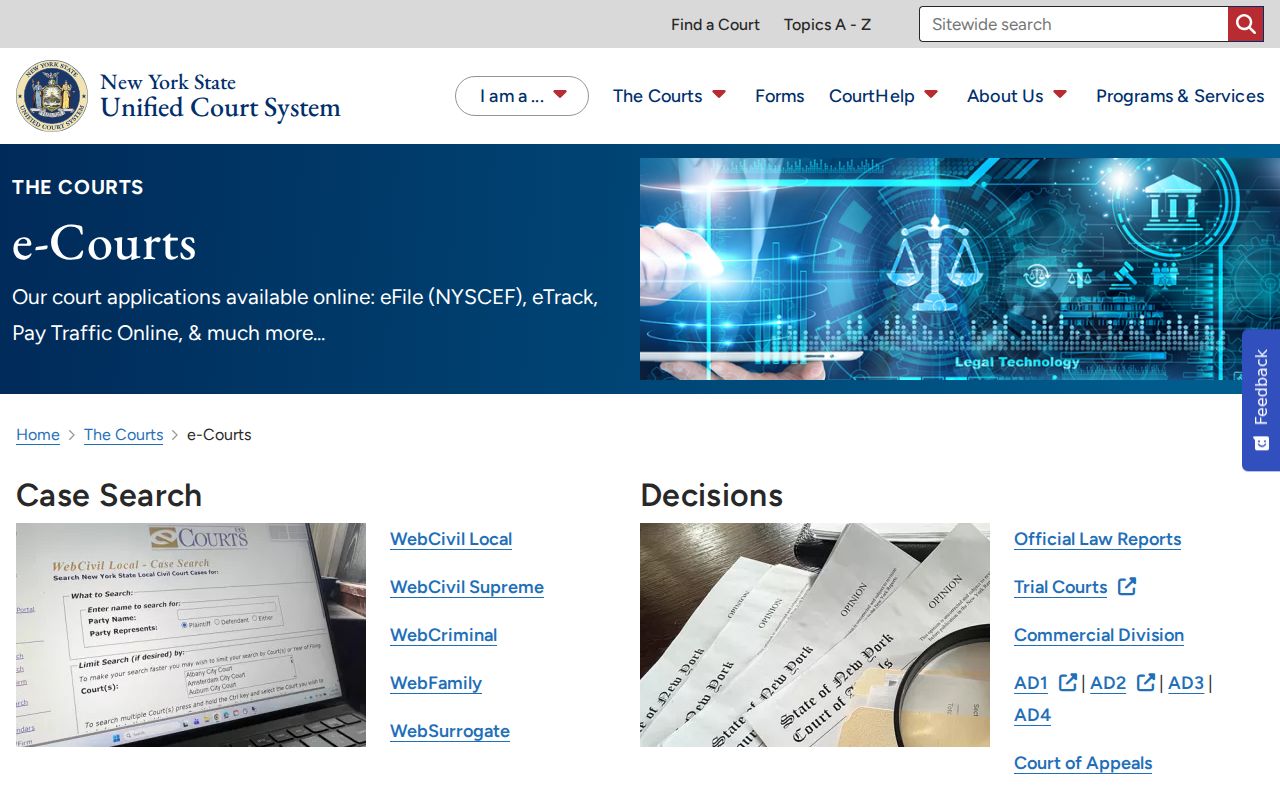
Courts are a separate branch of Manhattan research. The eCourts hub directs users to WebCivil Local, WebCivil Supreme, WebCriminal, WebFamily, eTrack, and NYSCEF. Search fields depend on the product but can include party name, case or index number, county or court, attorney, status, and dates. Guest NYSCEF searches may expose public e-filed cases and documents, while New York County Clerk records use their own counter and requisition process.
Some matters will not appear in a public result. Family, adoption, youthful-offender, juvenile, sealed, and not-yet-entered records have different access rules. Court-file copies and inspection are governed by Judiciary Law §255 and court rules rather than FOIL. For federal cases in the Southern District of New York, PACER is the separate docket system and requires an account.
The eCourts hub is the proper starting point for selecting a New York court-search product.
Manhattan Residents Directory Custody Records
Custody and offender records are separated by jurisdiction and status. The NYC Department of Correction Incarcerated Person Lookup Service concerns current city custody and can provide information such as charges, court date and location, book and case number, holding location, release date, and bail or bond details where the system allows. A person transferred to state or federal custody will not remain in that city service.
For state custody, the NYS Department of Corrections and Community Supervision lookup accepts a full name and birth date or a DIN. The Federal Bureau of Prisons locator is a different federal tool that accepts a name or register number, with optional age, race, and sex fields. New York’s public sex-offender directory covers Level 2 and Level 3 individuals online; Level 1 and pending-risk confirmation uses the designated telephone route and an additional identifier. These tools are status-specific records, not a way to assemble a local roster.
Manhattan Residents Directory FOIL Requests
When an agency record is not posted, the next step is a focused request to the government body that actually holds it. New York’s Freedom of Information Law is Public Officers Law Article 6, §§84–90. A request should identify the existing record, relevant date range, desired format, contact details, and delivery preference. It does not require an agency to create a new compilation or answer an open-ended research question.
Under §89(3)(a), an agency generally has five business days to grant or deny access, state that it does not hold the record, or acknowledge the request and give an approximate decision date. Ordinary paper copies generally cost $0.25 a page under §87(1)(b)(iii), while an unusual format can involve actual reproduction cost. Court files follow the clerk and Judiciary Law §255 instead, and City Register research follows its property-record procedures rather than a substitute FOIL request.
Manhattan Residents Directory Vital-Record Routes
Vital records are split by date and record type. The NYC Historical Vital Records collection at the Municipal Archives covers digitized births, deaths, and marriages from 1855 through 1950. Later birth and death certificates are handled by NYC Health under record-specific eligibility and identity rules, while the City Clerk handles marriage records. New York State Department of Health routes statewide records outside NYC and NYC divorce certificates differently.
For family history, New York’s general genealogy rules open birth records after 75 years when the person is known deceased, death records after 50 years, and marriage records after 50 years when both spouses are known deceased. NYC events are generally handled through NYC custodians. A certificate request should use the current custodian form, not an assumption based on a directory index.
Manhattan Residents Directory Privacy Boundaries
Records access has real limits. New York’s Address Confidentiality Program provides a substitute address and free mail forwarding for qualifying participants; the actual location remains confidential. Voter records can also be confidential under Election Law §5-508. New York’s voter-data rules require an elections-purpose statement for a larger file request, and a FOIL request cannot create a new private resident list or overcome a protected record.
Personal research only. Use Manhattan records for lawful personal, family-history, civic, or consumer-safety research. Do not use information to stalk, harass, intimidate, or harm another person.
Manhattan Residents Directory License and Business Checks
A professional credential or business filing may confirm a public professional or organizational connection, but it does not prove a home address. NYSED’s verification service covers more than 50 professions and accepts a profession plus name or a six-digit license number. The NYS Department of State entity database is updated daily and can return entity name, organization date, jurisdiction, county, service address, agent, status, and filing history.
Use those sources to verify the record category they actually maintain. For a UCC question, the Department of State’s UCC process offers public inquiry and UCC-11 search or copy orders, with separate fees and pre/post-July 1, 2001 indexing rules. These business records remain distinct from an address-residency question.
Manhattan Residents Directory Historical Shelves
For older residents, NYPL’s digitized New York City directory collection reaches from 1786 to 1934, with public-domain images available online and other issues available through library divisions. Municipal Archives lists Manhattan directory runs for 1873–1913, 1915–1918, 1920, 1922, 1924, 1931, and 1933. Entries are largely alphabetical and often center on heads of household, usually with occupation and home or business address.
The archives also hold the 1890 Manhattan Police Census, an address-ordered record with resident name, age, and sex, including children. There is no mail-search service for that census, so an in-person visit or research request is the appropriate fallback. The dedicated city directories guide explains how to read those volumes across years.
Manhattan Residents Directory and Community Records
Community information is another useful but limited layer. Manhattan has twelve Community Boards, each serving named neighborhoods and publishing public contact and meeting information. They are a way to understand a block’s civic setting, proposed land-use activity, or the office that receives neighborhood concerns. They are not resident rosters. Community Board 4 also maintains a public Chelsea and Clinton inventory of blocks and neighborhood associations, which can help identify an organization tied to a specific area.
For an address question, use civic material alongside parcel data rather than in place of it. A map or board boundary can help locate a neighborhood, while ZoLa and the Department of Finance tools identify the parcel, and the voter tool remains a known-person confirmation service. The same careful distinction applies to neighborhood groups: a public contact page may show a group’s activities or representative but does not establish who lives at every address on a block.
Manhattan Residents Directory History and Address Change
Manhattan’s record trail predates the modern numbered grid. The 1811 Commissioners’ plan mapped the planned grid north to 155th Street, while lower Manhattan retained older irregular streets, wards, alleys, and named roads. Address numbers can change when blocks develop, buildings are replaced, or street names shift. There is no single citywide research source that resolves every renumbering.
When an old directory address does not match a current location, compare its cross streets, map sheet, legal description, and BBL rather than forcing a match. Sanborn and Perris maps, DOB records, the City Register, NYPL, and Municipal Archives each preserve part of that bridge. A careful timeline labels what a source actually shows for its own period.